
Geology
of the Spannagel Cave System
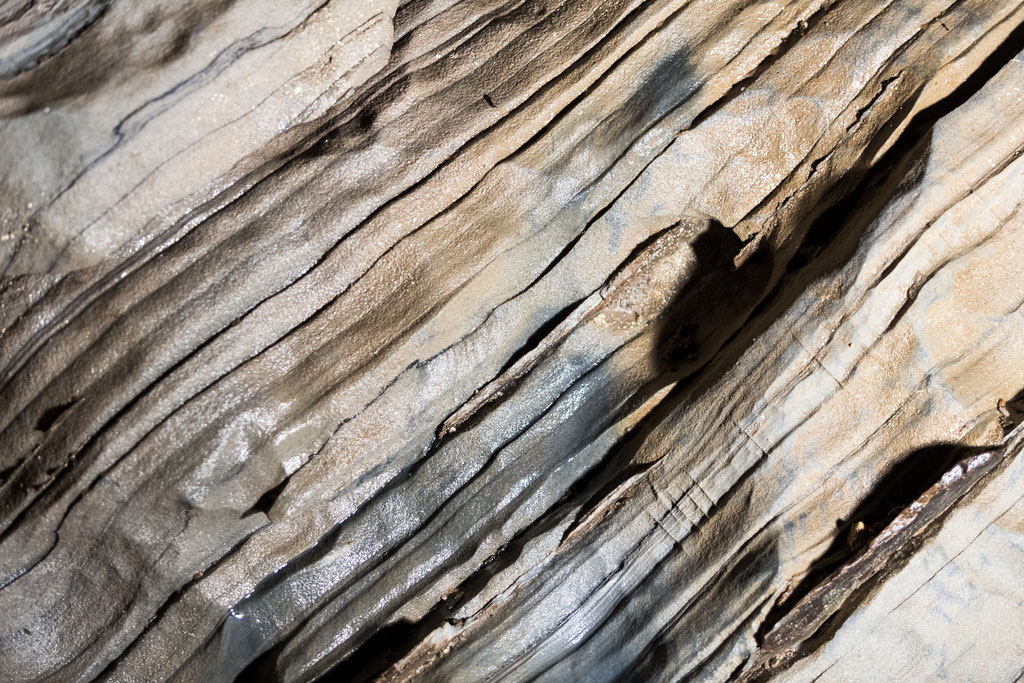
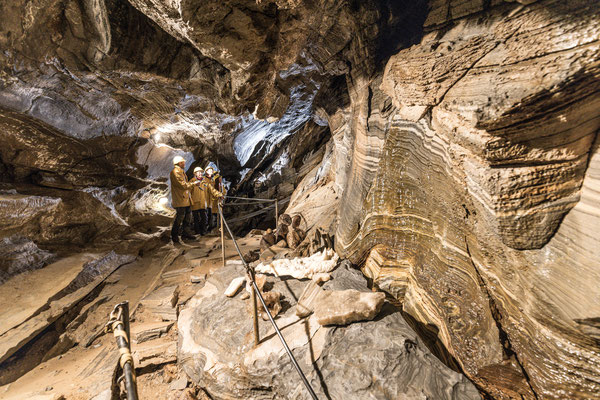
The area around the Hintertux Glacier consists mainly of Central Gneiss. Cave formation, however, is not possible in this type of rock. Due to the complex tectonic structure of the region, a band of marble was embedded within the gneiss during the Alpine mountain-building process. The cave system lies within this marble band, which is approximately 25 metres thick and extends from the Spannagelhaus towards Hintertux.


How Marble Forms
“A Sea 150 Million Years Ago”
The sparse remains of ancient organisms were deposited on the floor of a shallow shelf sea. Even though the rock was later transformed by metamorphism, it can still be clearly shown that the deep water in this sea must have been hostile to life — in other words, poor in oxygen.
In the case of the rear Tux Valley, we know that these rocks were lifted back to the surface only in relatively recent geological times, after having been deeply buried within the Earth’s crust.
The first stage — the “descent” into the Earth’s interior — took place during the Alpine mountain-building process. Rock nappes from crustal segments farther south were pushed over what are now the Central Alps, burying the marble at a depth of around 25 kilometres.
Under these conditions — up to approximately 550°C and pressures of up to 10,000 bar — rocks begin to react plastically. Their mineral composition changes through metamorphism. In the case of the Spannagel Cave system, this process transformed Upper Jurassic marine limestone into marble.
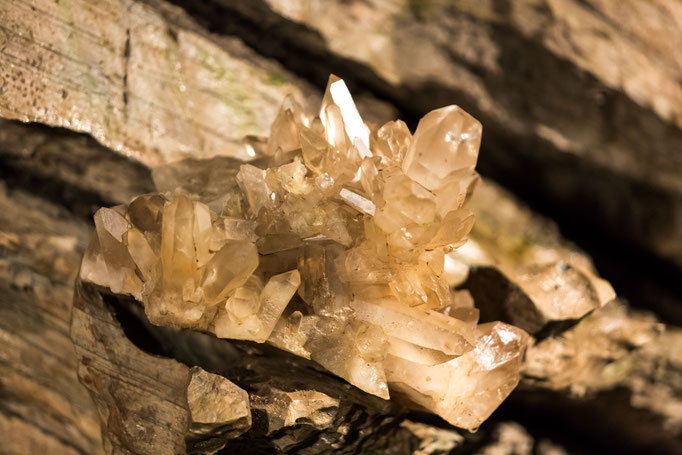
Around 20 million years ago, the “uplift” began. Fissures opened in the rock, hot mineral-rich fluids entered them, and the well-known Alpine fissure minerals, such as rock crystal, were formed.
Since the beginning of this uplift, weathering and erosion have removed almost as much material as has been raised from below.
The interaction between slow uplift and erosion ultimately means that mountaineers in the western Zillertal Alps are today walking across rocks that, around 20 million years ago, still lay deep within the Earth’s crust.
Hydrogeology
Cave Streams
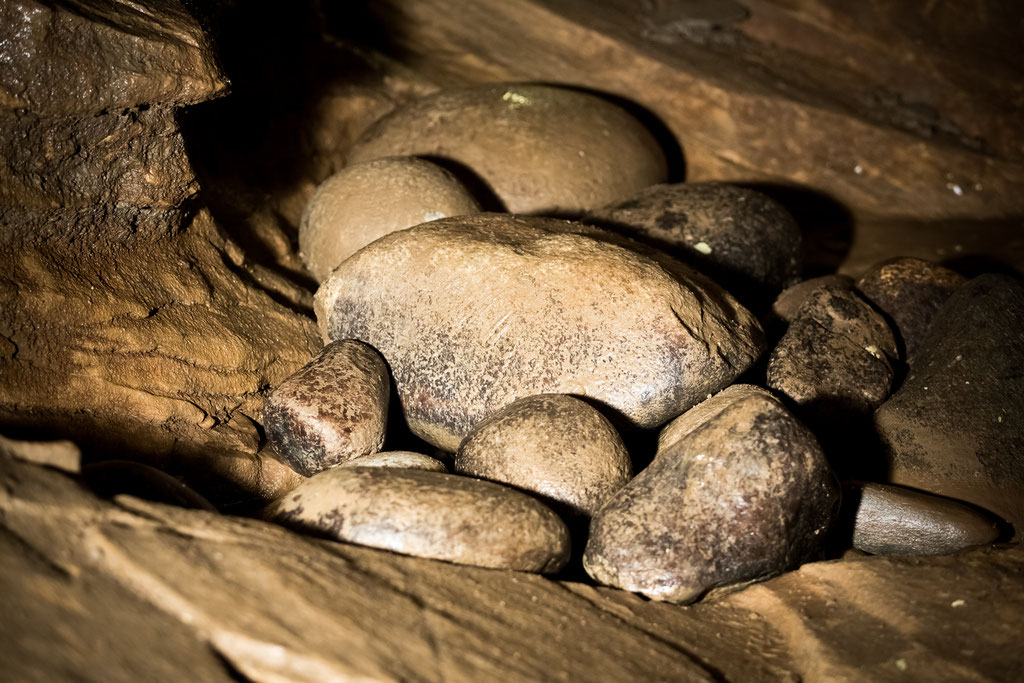
Today, most of the Spannagel Cave system is hydrologically fossil. This means that the fast-flowing water component, which once created the passages and chambers with large volumes of water under very different conditions, is no longer active in the same way.
The streams found in the cave today are only tiny rivulets compared with the powerful flows that once shaped the cave. In late winter, their discharge drops to a fraction of its usual amount, or they may disappear completely.
Seepage Water and Speleothems
In addition to the fast-draining water component, there is also a wide range of seepage waters that appear inside the cave as dripping points. These waters are responsible for the cave’s speleothem decoration.
They range from corrosive dripping and splash water to calcite-depositing waters. In some places, the dripping is so slow that gradual evaporation can even cause gypsum to crystallise.
Cave Climate
One special feature of Tirol’s largest cave is that the entrance directly below the Spannagelhaus is also the highest point of the cave system.
Little is known about the various routes by which air enters the lower parts of the cave, especially the northern system. What is clear, however, is that air movement can be felt particularly strongly in the northern system. In narrow passages, this airflow can reach unpleasant wind strengths.
The ventilation of the Spannagel Cave follows the chimney effect. The cave temperature is around +2°C. When the outside temperature is lower, air rises through the cave and relatively warm air flows out at the entrance. When the outside temperature is higher, the airflow reverses.
Further Information
Geology of the Spannagel Cave
Detailed information on the cave system, its formation, hydrogeology and distinctive cave climate.